

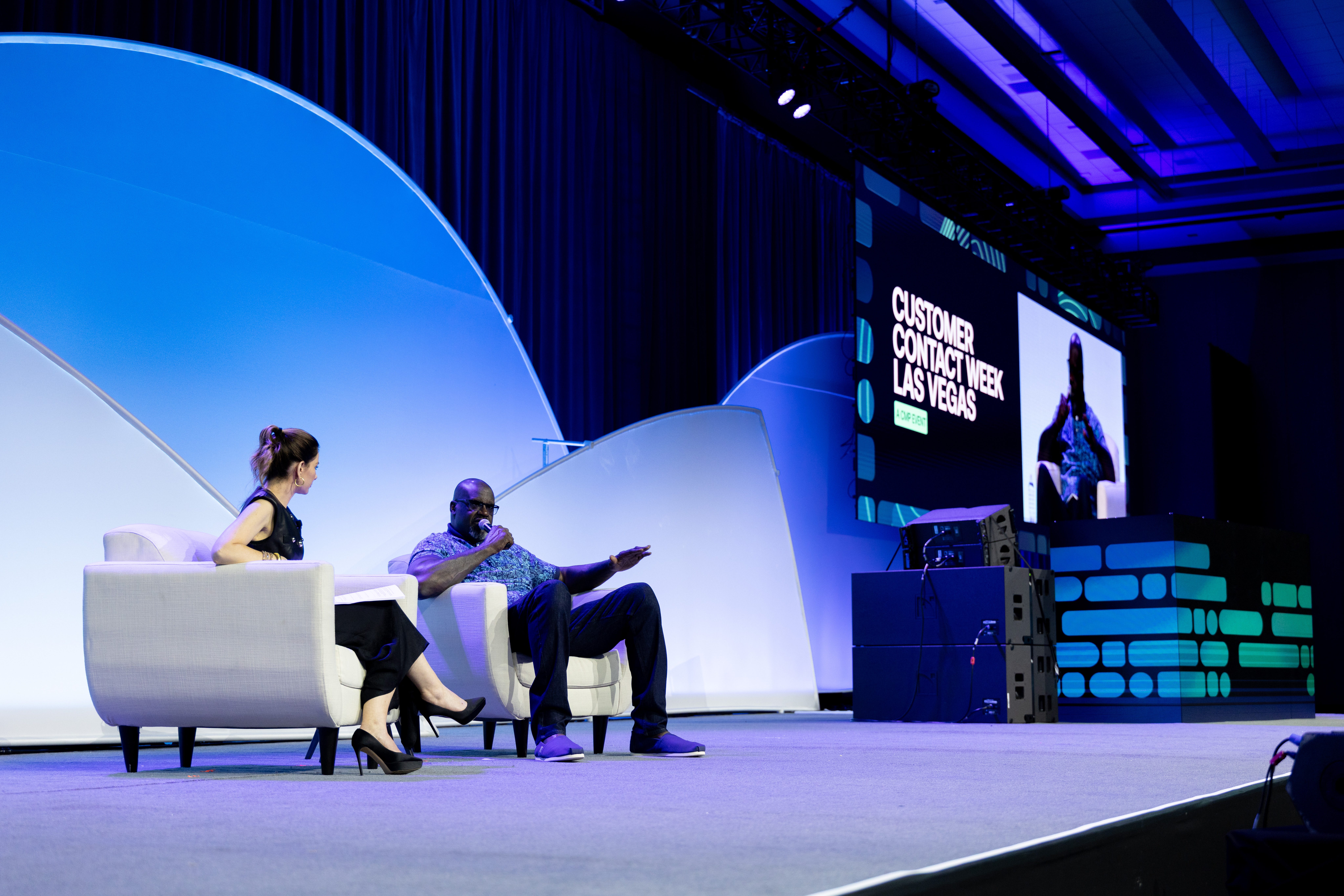
CCW Vegas had no shortage of Voice AI. What stood out was how little patience buyers have left for vague promises.
The conversation has shifted from what can AI do? to what has it actually done?
This was the year the industry stopped debating AI and started auditing it. Here is what stood out most.
1. AI has entered its proof era
The AI market was crowded, but not always convincing. Many vendors claimed leadership, while case studies were thin and demos were limited. Buyers weren’t short on options, they were short on proof.
The companies that stood out immediately show what their solutions change: lower handle time, faster resolution, lower cost, or less work for the agent.
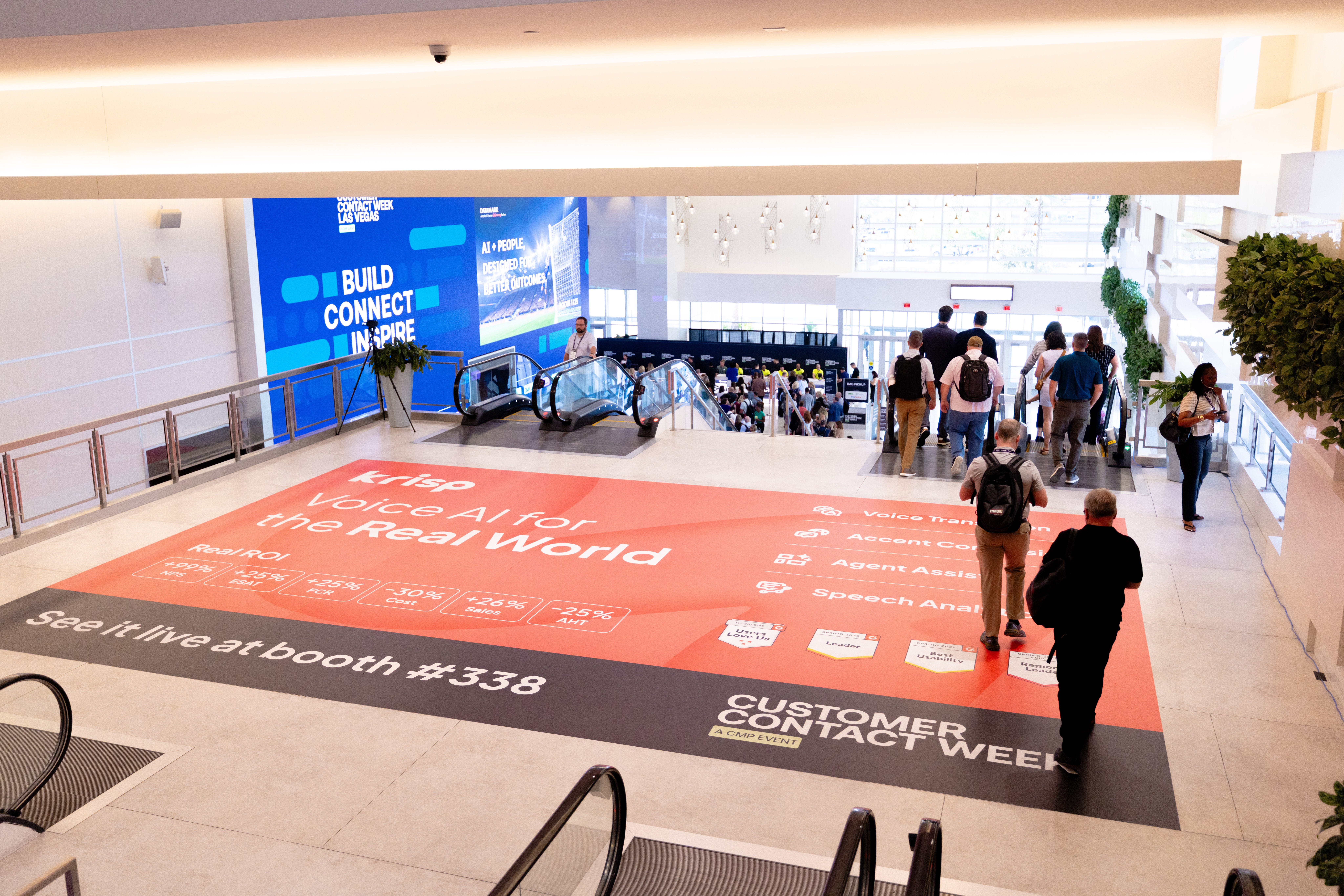
Takeaway: In a crowded market, credibility comes from showing results buyers can see, measure, and trust — and showing them upfront.
2. The best AI removes friction, not people
Despite all the talk about Voice AI eating CX, the industry is still growing. CCW felt bigger, busier, and more confident than ever.
The strongest signal from both BPOs and enterprises was that human-led and AI-powered CX will grow together.
Damola Adamolekun, CEO of Red Lobster, offered one of the clearest operating principles of the week in his keynote:
“Focus on the changes with the highest impact and lowest effort.”
Takeaway: AI’s near-term value is quick wins and removing the friction that holds companies and people back.
3. Voice Translation is changing the economics of language support
Multilingual conversations weren’t about features; they were about replacing a broken model: customer needs support, agent dials an interpreter, everyone waits. Interpreters are expensive, hard to staff, and regulated language requirements keep expanding.
The strongest proof came from production. On the main stage, Automated Health Systems shared how deploying Voice Translation reduced average multilingual calls from more than 40 minutes to just 9, expanding language access while dramatically reducing operational costs.
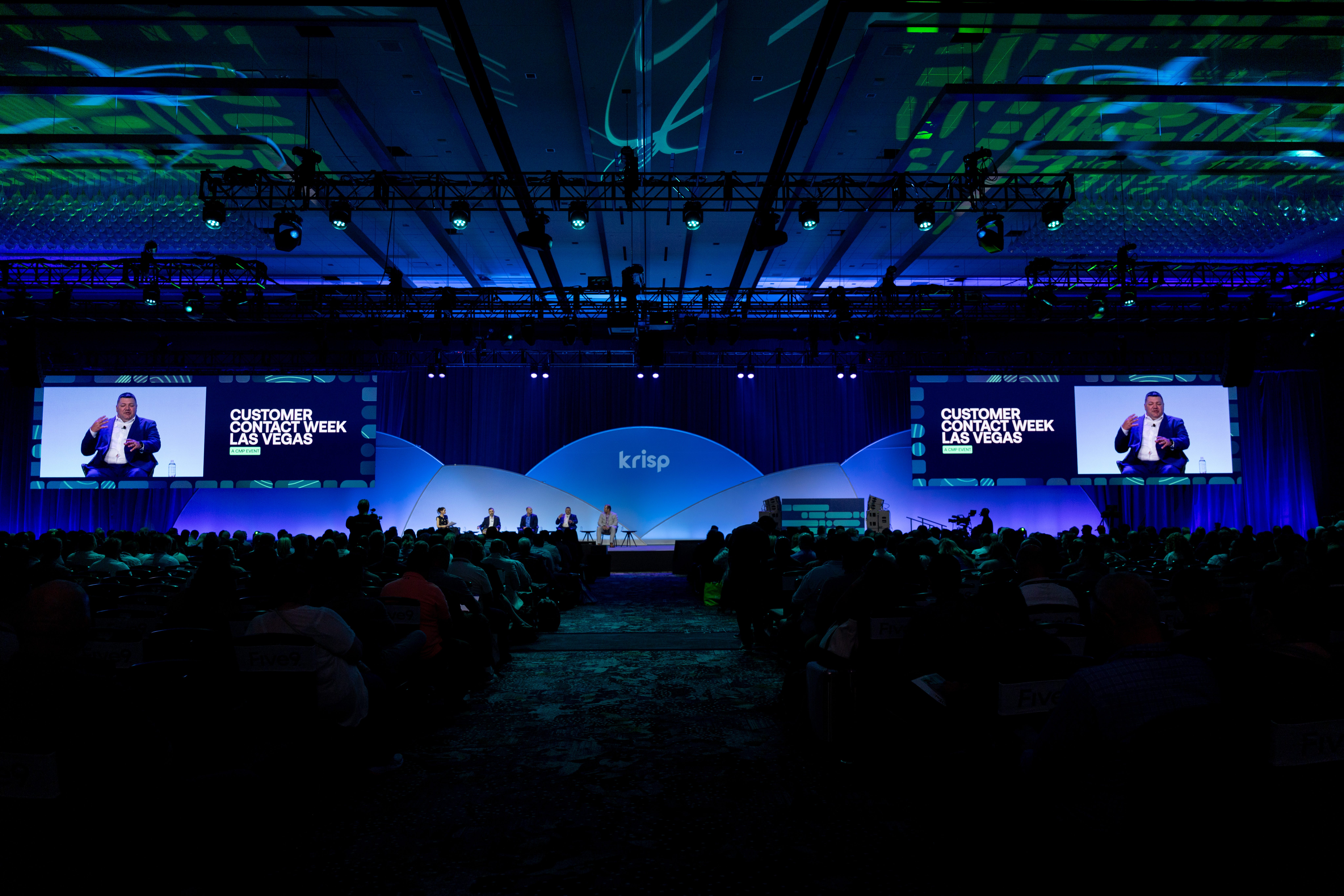
Takeaway: Translation isn’t just improving access — it’s changing the cost, speed, and scale of multilingual service.
4. Voice AI is CX infrastructure
The show floor made the shift hard to miss.
Cisco and Microsoft led with agentic workflows. Jabra focused more on analytics. Poly and Epos weren’t there.
At the same time, Voice AI companies had a much larger presence than in prior years.
The value is moving into what happens inside the conversation: improving audio, which improves everything downstream— translation, transcription, agent guidance, detecting risk, and powering AI interactions in real time.
Takeaway: Voice AI is becoming core infrastructure that the rest of CX depends on.
5. Voice security is urgent
Deepfake detection drew real interest, including follow-up requests from major enterprises.
The risk is growing fast:
Deepfake fraud attempts grew 2,137% in three years
AI-related cybercrime losses topped $893 million in 2025
Humans detect synthetic voices correctly only about 60% of the time
Most fraud controls still sit before or after the call, but most voice attacks happen during it.
As Geoff Burbridge, Founder of Human Edge Advisory, put it:
“AI is being used by bad actors out there, and newsflash, they’re not restrained. They’re not worried about regulation.”
Takeaway: Voice security is moving from future risk to an urgent buying requirement.
Sneak peek: Geoff joins the Voice AI Podcast next week to break down where synthetic voice fraud is hitting hardest, how real-time detection works in production, and what companies need to do now.
A milestone worth sharing
Krisp was named Disruptive Technology of the Year at the 2026 CCW Excellence Awards.
We’re honored by the recognition, but more importantly, it reflects where the industry is heading.

The technologies earning attention today aren’t chasing novelty. They’re solving real operational problems and delivering measurable results.
That was the story across the show floor, and one we’re proud to be part of.
What comes next
By CCW 2027:
Execution starts separating leaders from followers: Organizations that deployed AI in 2025-2026 will have results to show:
Those that redesigned around the technology will have compounding returns.
Those that layered it on top of old structures might be starting over.
AI autonomy: the Organizations moving fastest are starting with agent assist, proving value in production, and expanding from there. Deploying autonomous AI before you’ve built trust into the system is how you lose both.
Voice security becomes a procurement requirement: Operators asking questions now will have policies and vendor requirements in place, while those not paying attention will be responding to incidents.
Multilingual support consolidates: Operators want fewer vendors and end-to-end accountability across language access, accent support, and translation.
Agent experience reaches a tipping point: The industry can’t sustain current attrition rates. Companies that reduce friction and lower cognitive load, not just cut headcount, will have a structural talent advantage.
Voice gets the engineering investment it has always deserved: The channel, technology, and infrastructure layer are finally getting serious attention. Long overdue.
AI pressure will widen the BPO gap: BPOs that modernize their delivery model will pull ahead of those that don’t.
The market wants proof, fewer points of failure, and technology that improves the conversation in real time. By next year, the winners will be the ones with the clearest outcomes.
See you there.
Voice is where latency finally becomes a brand metric - a two-second pause reads as incompetence to a customer.