

Voice AI is scaling faster than contact center operating models and it shows.
New research by Krisp, in partnership with Ryan Strategic Advisory, shows voice AI adoption is accelerating, while staffing models, technology stacks, and budgets stay rooted in the past.
Here are the five things that stood out most.
1. The biggest barrier to global voice support is people, not technology
Contact centers are struggling to find enough agents with the right language skills in the right markets.
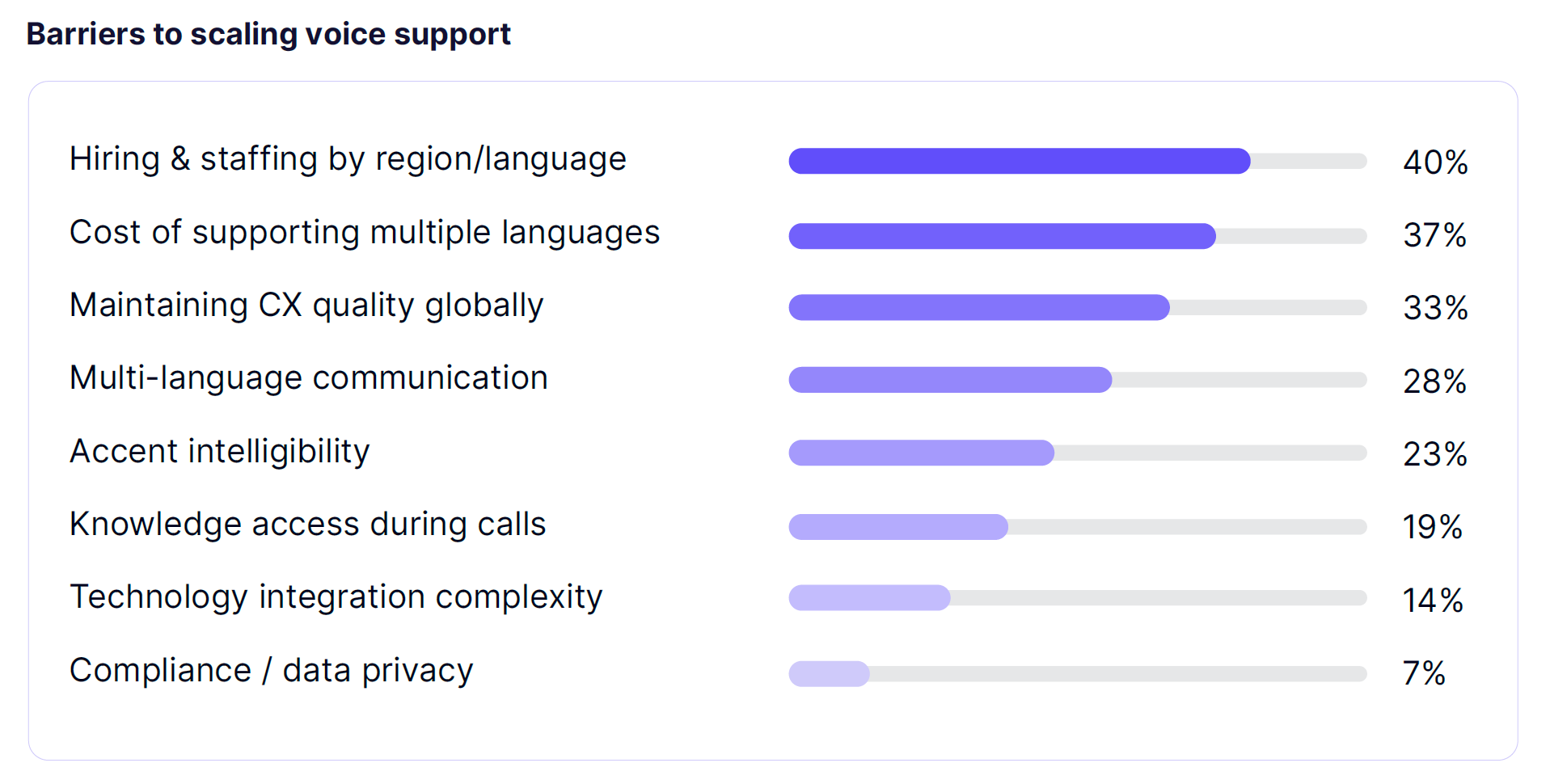
40% named hiring and staffing as a top barrier to scaling voice support globally and another 37% cited the cost of supporting multiple languages.
Technology integration ranked far lower at 14%.
Enterprises often frame voice AI as a technology project. The stronger business case is in solving workforce constraints and enabling global expansion.
The global CX labor model may reach its limit before the technology does.
2. Enterprises are using AI to make existing teams more effective
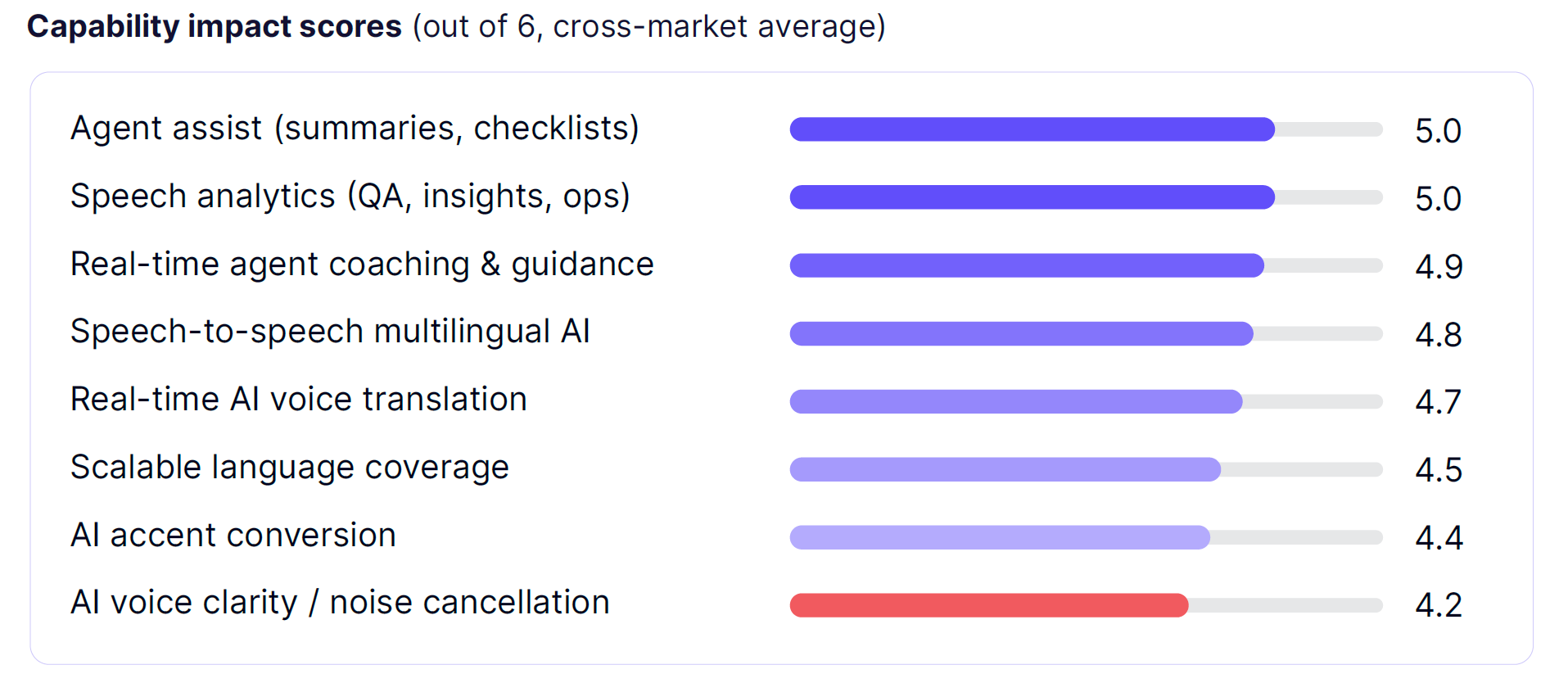
Agent Assist and Speech Analytics received the highest impact scores at 5.0 out of 6, followed by real-time coaching at 4.9.
Multilingual AI and Voice Translation ranked close behind at 4.8 and 4.7.
The near-term priority is clear: help current agents work faster and handle more complex conversations. Language AI goes further by expanding the customers and markets those agents can support.
Agent Assist may win the first budget, but language AI could create the larger economic shift.
3. Voice AI adoption is approaching a tipping point
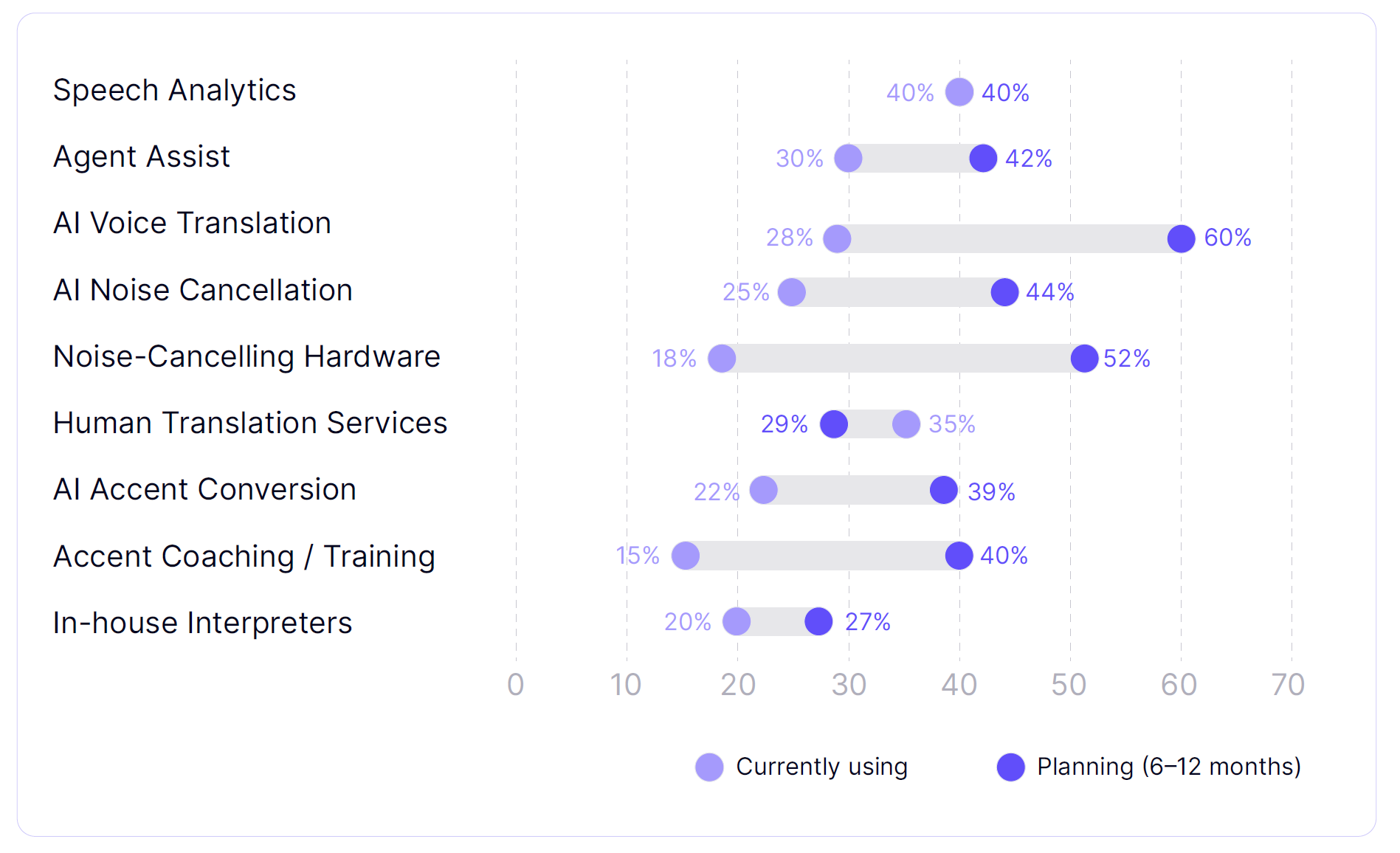
Planned adoption matches or exceeds current usage across every AI category measured.
AI Voice Translation shows the largest jump: 28% currently use it, while 60% plan to adopt it within the next 6–12 months.
Planned adoption also reaches 44% for AI Noise Cancellation, 42% for Agent Assist, and 39% for Accent Conversion.
The market has moved from exploring voice AI to deciding what to deploy first.
Companies still treating voice AI as an innovation project are already behind the buying cycle.
4. AI adoption is rising faster than AI budgets
56% of enterprises allocate more than half of their voice CX budget to onshore agents.
Meanwhile, 65% spend less than 10% on AI agents, and 55% spend less than 10% on AI translation.
The biggest share of spending stays tied to the model facing the most pressure. AI can change the economics by helping the same workforce support more customers, markets, and languages.
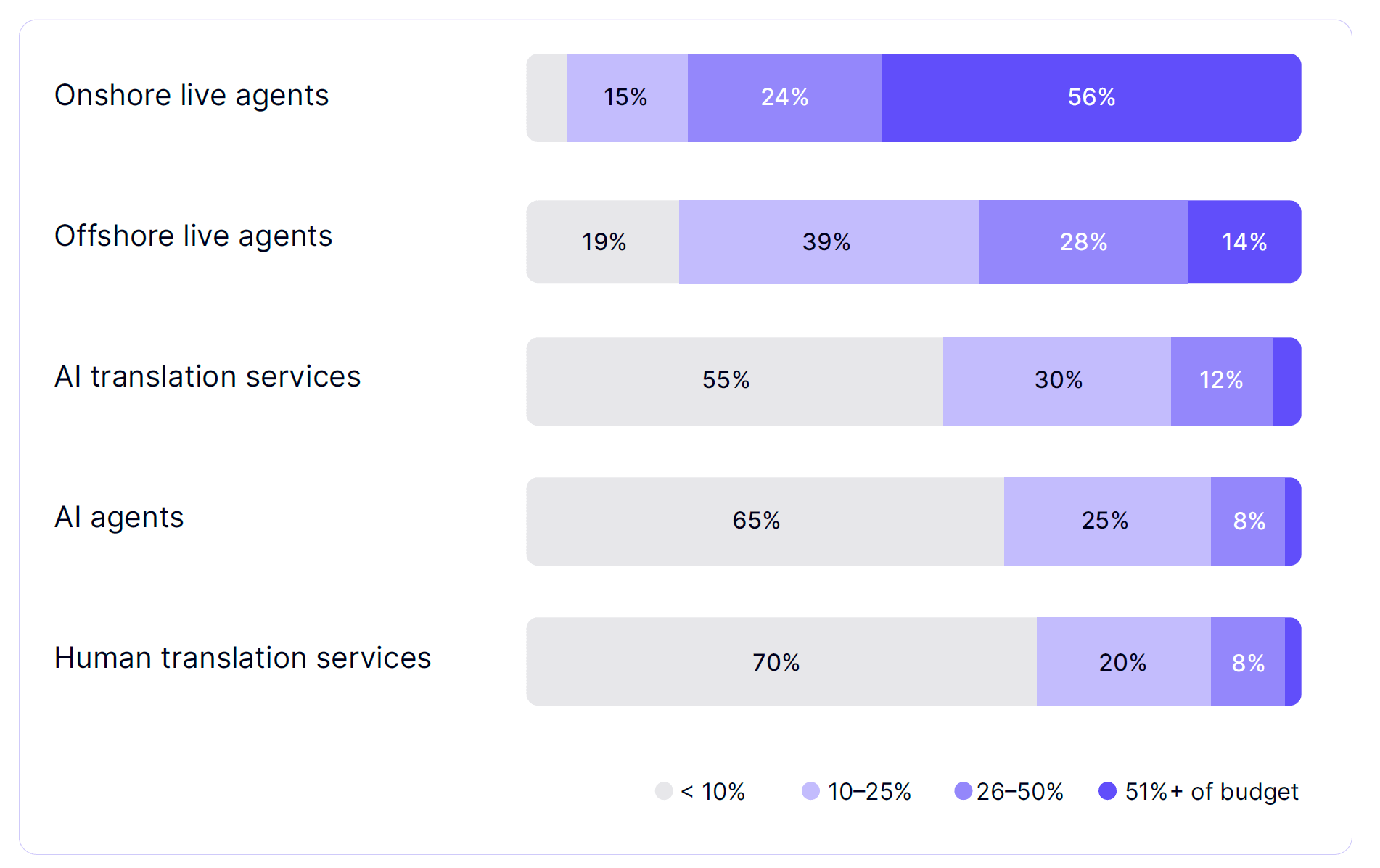
The real AI budget may already exist but it’s sitting inside labor spend.
5. The market changed dramatically since 2025
Reliance on human translation fell from 65% in 2025 to 35% in 2026.
Over the same period:
Voice Translation intent rose from 36% to 60%
Accent Conversion adoption and intent grew from 24% to 61%
AI Noise Cancellation reached 69%
Speech Analytics reached 80%
Voice AI is moving into the core contact center stack faster than most operating models can adapt. The bigger risk is building around assumptions that are already outdated.
Voice AI is moving faster than most operating models can adapt
The market has entered a new phase: adoption is accelerating, budgets are starting to shift, and the old assumptions around staffing, language coverage, and delivery are breaking down.
The advantage will go to companies that act on those signals early, before fragmented pilots become fragmented infrastructure.
Read the full 2026 State of Voice in CX report for the complete findings and industry implications.